How to Build a Monthly Budget You Will Actually Follow
A practical budgeting framework for salaried professionals using fixed, flexible, and growth buckets.
By Spend8 Editorial Team · Published 2026-04-08 · Updated 2026-04-15
Quick Summary
Budgeting should feel like a control system, not punishment. This framework helps Indian salaried professionals allocate money with clarity and stick to the plan without spreadsheet fatigue.
- Use three broad buckets before creating detailed sub-categories.
- Start with 50/30/20, then tune by lifestyle and city costs.
- Do a 10-minute weekly review to prevent month-end surprises.
Start with clear money buckets
Most budgets fail because categories are too detailed from day one. Start with three practical buckets: fixed expenses, flexible expenses, and growth expenses.
Fixed includes rent, EMIs, insurance, and utilities. Flexible includes food delivery, shopping, and transport. Growth covers investments, emergency savings, and skill development.
If your salary lands in one account, automate transfers into bucket accounts on payday. This lowers daily decision fatigue and keeps each bucket accountable.
Use the 50-30-20 rule as a baseline
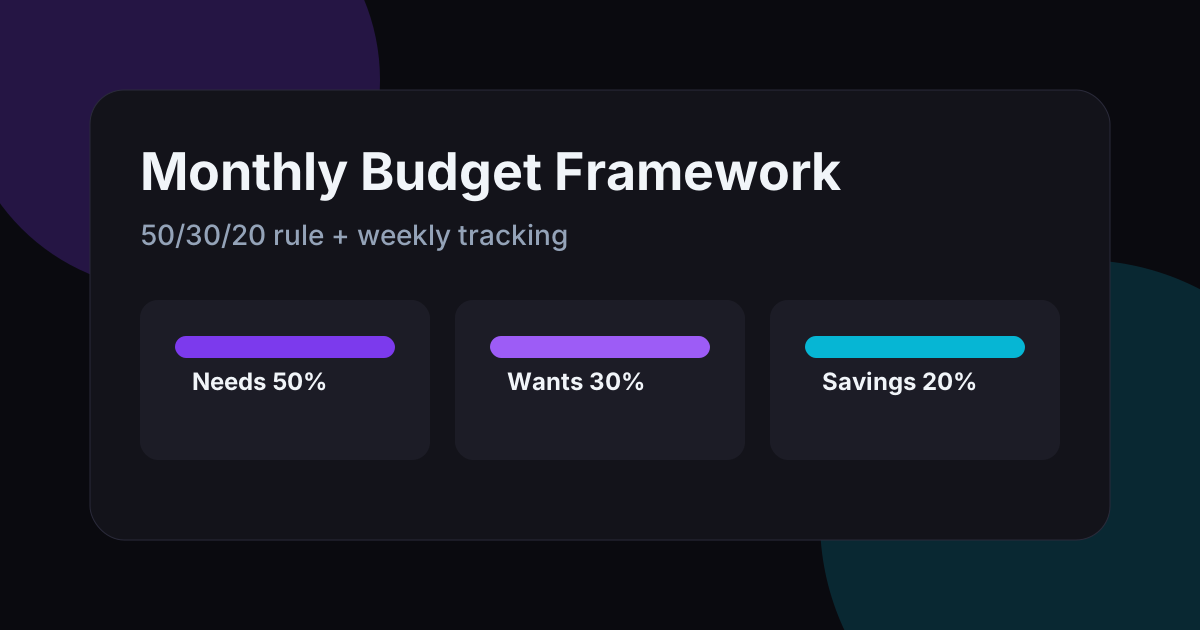
For most salaried users, 50% for needs, 30% for wants, and 20% for savings or investments is a reliable starting point. You can adjust based on city and lifestyle.
If your fixed expenses are high right now, temporarily reduce wants and slowly rebalance over the next 3-6 months.
Treat this rule as a planning anchor, not a moral scorecard. The real goal is consistency and progress month-over-month.
Track weekly, not only monthly
Waiting until month-end hides spending leaks. Check your totals weekly to catch trend shifts early and take small corrective actions.
A weekly review of top categories can improve consistency more than creating a perfect spreadsheet.
Use weekly checkpoints to reset category caps for food, travel, and lifestyle so one overspend week does not break the full month.
Make your budget realistic and adaptive
A strict budget that ignores real life will collapse quickly. Keep a small buffer category for unplanned events like gifting, repairs, and medical top-ups.
At month-end, review what worked and move limits between categories based on actual behavior. Budgeting is a living system, not a fixed template.
Frequently Asked Questions
How often should I update my monthly budget?
Review budget categories weekly and do one deeper rebalance at month-end. Weekly checks keep you proactive while month-end helps refine the next cycle.
Is 50-30-20 mandatory for everyone?
No. It is a strong starting point. If your rent and EMIs are high, use a temporary split that works and gradually move toward better savings ratios.