UPI Spending Leaks: 7 Tiny Habits That Drain Your Wallet
From snack orders to impulse subscriptions, learn how to catch hidden spend patterns before they snowball.
By Spend8 Editorial Team · Published 2026-04-03 · Updated 2026-04-15
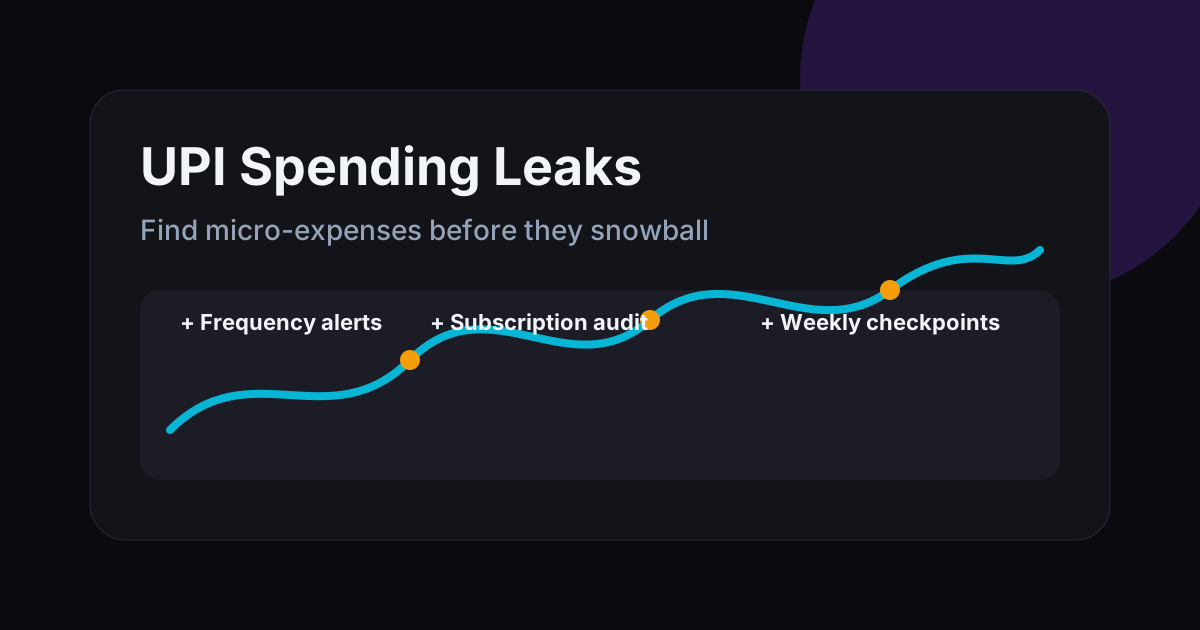
Quick Summary
Most people do not lose money in one big purchase. They lose it in dozens of tiny UPI transactions that feel harmless in isolation. This guide helps you detect and fix that pattern.
- Transaction frequency is often a bigger problem than transaction size.
- A short pause before non-essential spending reduces impulse purchases.
- Recurring payment cleanup creates immediate savings.
Small frequency beats large one-time spend
Most users overestimate rare big purchases and underestimate repeated micro-spends. Daily coffee, quick deliveries, and short ride upgrades add up fast.
When a category appears 20+ times in a month, frequency becomes your biggest cost driver.
Run a simple audit: sort transactions by count, not amount. The highest-count categories usually reveal your biggest behavior-level leaks.
Create a friction layer for impulse buys
Add a 24-hour pause rule for non-essential purchases above a threshold. Even a short delay improves decision quality and reduces regret spending.
A simple note called 'buy later list' can filter wants from actual needs.
For low-value purchases, use daily caps. For higher-value discretionary purchases, use a cooling-off period plus one practical question: will this matter in 30 days?
Audit subscriptions every month
Many users keep paying for services they no longer use. Review all recurring charges monthly and cancel what you have not used in the last 30 days.
Subscription cleanup is one of the fastest ways to free up cash flow.
If cancellation feels hard, downgrade to basic plans first. Reducing recurring cost is still a strong win compared to doing nothing.
Build replacement habits, not only restrictions
Pure restriction creates rebound spending. Replace one costly routine with a lower-cost alternative like planned meal prep, grouped shopping days, or fixed cab budgets.
When alternatives are convenient, discipline becomes easier and long-term savings improve naturally.
Frequently Asked Questions
How can I quickly identify UPI spending leaks?
Check your last 30 days and group transactions by merchant and category count. Repeated low-ticket spends are usually where leakage is highest.
Should I stop all discretionary spending?
No. The goal is intentional spending, not zero spending. Keep room for lifestyle costs but cap frequency and track it weekly.